
One of the quiet worries families have about a parent or loved one moving abroad is distance – will they still feel close, still be reachable, still be safe? Technology has largely answered that question. From video calls that make grandchildren feel like they’re in the room to wearable devices that quietly monitor wellbeing, today’s tools do a lot of the work of keeping seniors connected and secure in Thailand. Here’s what’s actually available and worth using.
Internet & Communication
Smartphone Use
Smartphone adoption among older adults in Thailand has grown quickly, helped along by messaging apps like LINE, which is close to universal here and used as much for daily communication as WhatsApp is in the West. Research on technology adoption among Thai seniors consistently points to one interesting finding: social acceptance within a community matters more to whether someone adopts a new device than the technology itself does. In practice, that means a senior living community where tech use is normal and supported tends to see much higher, more comfortable adoption than someone navigating it alone.
Internet Access
Urban areas like Pattaya have strong, reliable 4G and 5G coverage, and most residences – including senior communities – offer fiber broadband as standard. For newcomers, it’s worth learning the basics of switching between Wi-Fi and mobile data, mainly so a weak signal in one location doesn’t feel like a dead end.
Video Calling and Social Media
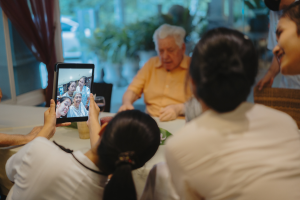
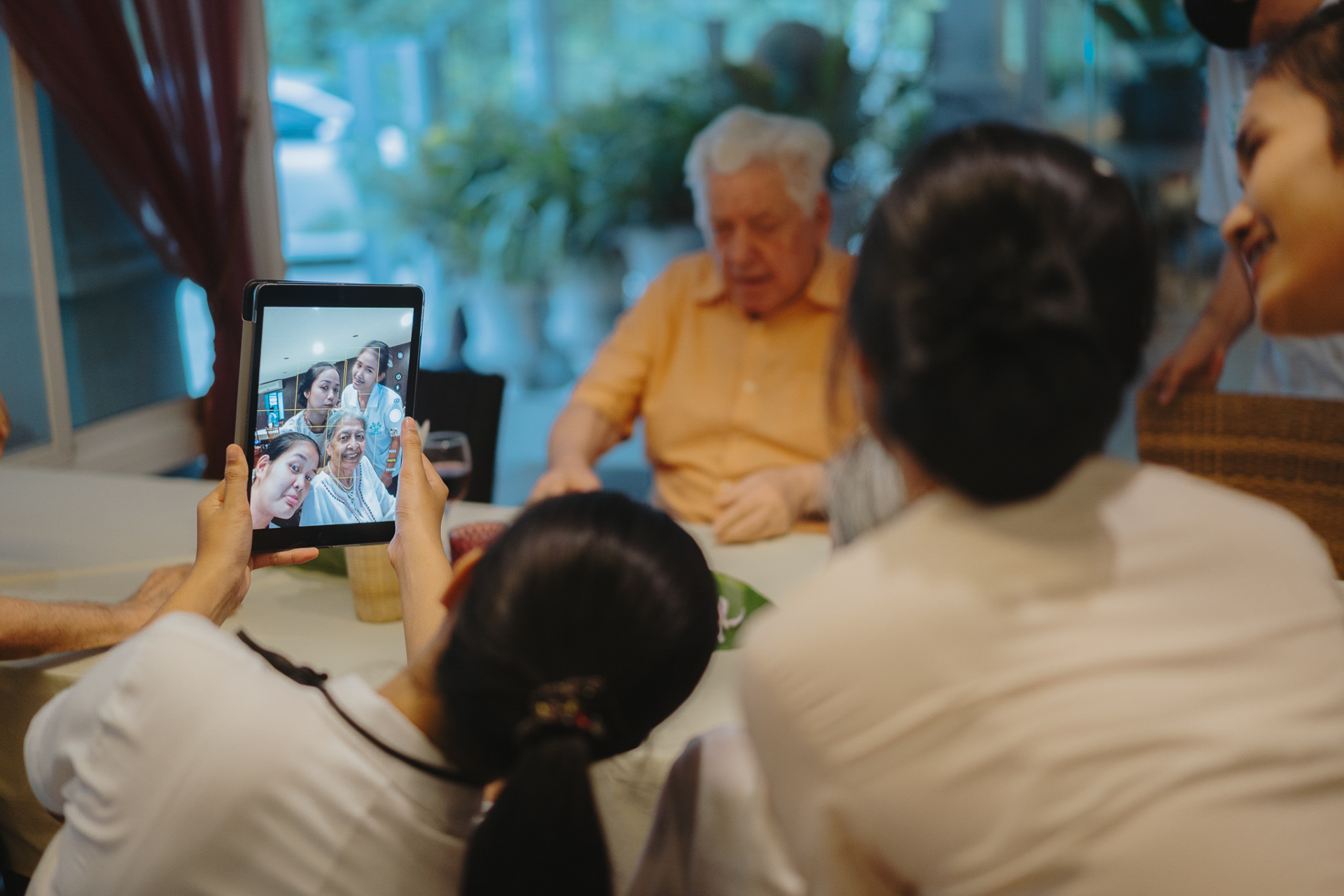
Regular video calls are, for many families, the single most valuable piece of technology in this whole list – a five-minute call with grandchildren does more for wellbeing than almost anything else on this page. Community social media groups (often organized through LINE or Facebook) are also a simple way to stay looped in on local events and community news.
Telemedicine & Health Tech
Telehealth Services
Video consultations with doctors have become a standard offering at Thailand’s private hospitals, letting residents handle routine follow-ups or minor concerns without a trip to the clinic. For anyone managing an ongoing condition, this can meaningfully cut down on how often an in-person visit is actually necessary.
Wearables and Monitoring
Wearable health monitors – tracking heart rate, activity, and in some cases detecting falls – have been well received in studies of Thai seniors, with satisfaction rates as high as 93.8% among users of wearable monitoring devices in one regional study. For families abroad, a fall-detection wearable in particular offers real peace of mind.
IoT Health Devices
Beyond wearables, connected blood pressure cuffs and pulse oximeters let residents track vital signs at home and share readings directly with a doctor or care team, catching small changes early rather than waiting for a scheduled check-up to notice a trend.
Assistive Technologies
Home Automation
Simple home automation – easy-press lighting, voice-activated controls, emergency call pendants – reduces daily friction and adds a layer of safety, particularly for anyone with limited mobility or a fall risk.
Mobility Aids
GPS trackers built into mobility aids or personal devices give both residents and families reassurance, particularly useful for anyone who enjoys independent outings but has a family member who worries about them wandering too far off a familiar route.
Digital Literacy & Training
Senior Tech Workshops
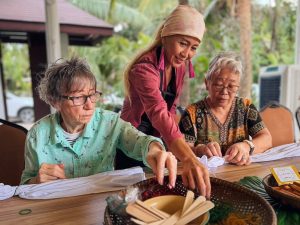
Beginner-friendly classes – covering everything from making a video call to using a camera – are widely offered by retirement communities and are genuinely effective at building confidence quickly. Starting with large-button, simplified devices and building up from there tends to work better than starting with a fully-featured smartphone on day one.
The Role of Community Support
Peer teaching consistently outperforms formal instruction alone. A friend or fellow resident showing someone how to make their first video call tends to stick better than a manual ever could – which is exactly why community-based “digital buddy” programs, pairing tech-comfortable residents with those still learning, tend to work so well.
Privacy & Safety Online
Avoiding Scams
Scam awareness deserves real attention: fear of online fraud is one of the most commonly cited reasons older adults in Thailand hesitate to engage with technology at all, with close to 30% of surveyed seniors citing it as a barrier. The good habits are simple but worth repeating regularly: never share passwords or one-time codes, only use official banking and messaging apps, and treat unsolicited messages asking for money or personal details with real skepticism, regardless of how convincing they seem.
Passwords and Security
Simple, consistent security habits – unique passwords, enabling two-factor authentication where available, and keeping devices updated – go a long way. Community IT support, where available, is worth using proactively rather than only after something’s gone wrong.
Häufig gestellte Fragen
Nutzen viele thailändische Senioren tatsächlich Smartphones?
Ja, und die Akzeptanz wächst schnell, insbesondere durch Messaging-Apps wie LINE. Untersuchungen legen nahe, dass Senioren viel eher dazu neigen, Technologie anzunehmen, wenn ihr Umfeld dies ebenfalls tut, was mit ein Grund dafür ist, dass ein unterstützendes Wohnumfeld einen so großen Unterschied macht.
Welche Telemedizin-Optionen stehen zur Verfügung?
Private Krankenhäuser in Pattaya bieten häufig Videoberatungen für Routine- und Nachsorgeuntersuchungen an, und viele Seniorenwohnanlagen unterstützen ihre Bewohner bei der direkten Buchung.
Gibt es echte Sicherheitsbedenken in Bezug auf Technologie?
Ja – es ist wichtig, sich vor Betrug zu schützen. Fast 30% der älteren thailändischen Erwachsenen geben an, dass die Angst vor Online-Betrug ein Grund dafür ist, dass sie sich nur zögerlich auf neue Technologien einlassen. Sich an offizielle Apps zu halten und niemals Passwörter oder Einmalcodes weiterzugeben, sind die beiden wichtigsten Verhaltensweisen.
Kann Technologie Einsamkeit wirklich verringern?
Auf jeden Fall. Regelmäßige Videoanrufe halten die familiären Verbindungen über Entfernungen hinweg stark, und soziale Mediengruppen in der Gemeinde helfen den Bewohnern, über lokale Ereignisse und das Leben der anderen auf dem Laufenden zu bleiben.
Wie kann ein älterer Mensch, der sich mit Technologie nicht auskennen, anfangen?
Anfängerkurse zu den Grundlagen – Telefonieren, SMS schreiben, Kameranutzung – sind weit verbreitet, und die เริ่มต้น mit einem vereinfachten Gerät, bevor man zu etwas Funktionsreicherem übergeht, baut tendenziell schneller Selbstvertrauen auf.
Ist die Internetverbindung in Pattaya zuverlässig?
Ja – das urbane Pattaya verfügt über eine starke 4G/5G-Abdeckung und Glasfaser-Breitband ist in den meisten Wohnungen Standard, mehr als ausreichend für Videoanrufe und den täglichen Gebrauch.
Learn more: See how our Senior Care Services build tech support into everyday life, browse photos on our Fotogalerie, or contact our team with questions about on-site tech support.
At Homerly, staying connected isn’t left to chance – from emergency call systems to help getting comfortable with a first video call, our team builds tech support into everyday life so residents (and the families checking in on them) both feel at ease.