
“What’s the weather actually like?” sounds like a small question, but for anyone planning a permanent move, it’s a practical one. It shapes everything from when you schedule your first visit to how you’ll manage day-to-day comfort once you’re here. Here’s a season-by-season look at Thailand’s climate, written for retirees rather than tourists passing through for a week.
Thailand Weather for Retirees: The Three Seasons
Instead of the four seasons most Western retirees grew up with, Thailand runs on three: cool, hot, and rainy. None of them are extreme by tropical standards, but each has its own character worth planning around.
Cool Season (November-February)
This is Thailand’s most comfortable stretch by a wide margin. Daytime temperatures usually sit in the high 20s to low 30s Celsius, with lower humidity and little rain. It’s also the busiest season for visitors, which means livelier tourist areas and higher short-term prices, though that matters far less once you’re a resident rather than a visitor passing through.
Hot Season (March-June)
This is the stretch that catches newcomers off guard. Temperatures regularly climb into the mid-to-high 30s Celsius, with April usually the hottest month nationwide. Humidity stays high the whole time, which makes the heat feel worse than the number alone suggests. This is the season most likely to test a new resident’s adjustment, so plan around it deliberately rather than hoping it won’t matter.
Rainy Season (July-October)
Rain here rarely means a gray, drizzly day. It’s usually a short, intense downpour, often in the afternoon or evening, with plenty of sun in between. Humidity stays high, and low-lying areas can flood locally during heavier storms, but daily life keeps moving around the rain rather than stopping for it.
Best Time to Visit or Move
For a First Visit
Cool season, November through February, is the easiest time to see Thailand for the first time. You get the best conditions for touring neighborhoods and properties, and an honest first impression without heat working against you.
For Moving Permanently
If your schedule allows it, moving during or just after cool season buys you several comfortable months to settle in, find housing, open accounts, build a routine, before your first hot season arrives as a resident rather than a visitor. Plenty of retirees still move at other times without any trouble; it’s more about comfort during the adjustment period than a hard rule.
Managing the Heat as a Senior
Practical Daily Habits
Schedule outdoor activities for the cooler morning or early evening hours, stay ahead of your thirst rather than waiting to feel it (older adults are more prone to dehydration and don’t always feel thirsty in time), and treat air conditioning as a comfort tool during the hottest months, not an indulgence.
Sun Protection
UV exposure stays significant even between rainy-season showers. Lightweight clothing, a wide-brimmed hat, and sunscreen are worth making a habit rather than an afterthought, especially if you’re on medication that raises sun sensitivity. Check with your doctor if you’re unsure.
Health Considerations
Heat can affect blood pressure medication, cardiovascular strain, and general fatigue more in older adults than younger ones. If you manage a chronic condition, talk to your doctor, ideally before your first hot season, about how Thailand’s climate might interact with it.
Climate and Community Living
At Homerly, this kind of planning is already built into daily life: shaded walkways, air-conditioned common areas, and outdoor activities timed for the cooler parts of the day. Residents aren’t left to solve the adjustment problem entirely on their own.
คำถามที่พบบ่อย
What is the hottest month in Thailand?
April, typically, with temperatures often in the mid-to-high 30s Celsius and high humidity throughout.
When is the best time to visit Thailand before deciding to move?
Cool season, November through February, gives you the most comfortable conditions for touring properties and neighborhoods without heat complicating the visit.
Does it rain all day during rainy season?
Usually not. Rainy season brings short, intense downpours, often in the afternoon or evening, with sunny stretches in between rather than continuous rain.
How should seniors manage the heat in Thailand?
Stay ahead of hydration instead of waiting to feel thirsty, schedule outdoor time for cooler hours, keep up sun protection, and ask a doctor how heat might interact with any medications you take.
Is Thailand's climate hard on health conditions like high blood pressure?
Heat can affect blood pressure and cardiovascular strain more in older adults, so it’s worth a conversation with a doctor ahead of your first hot season if you manage a related condition.
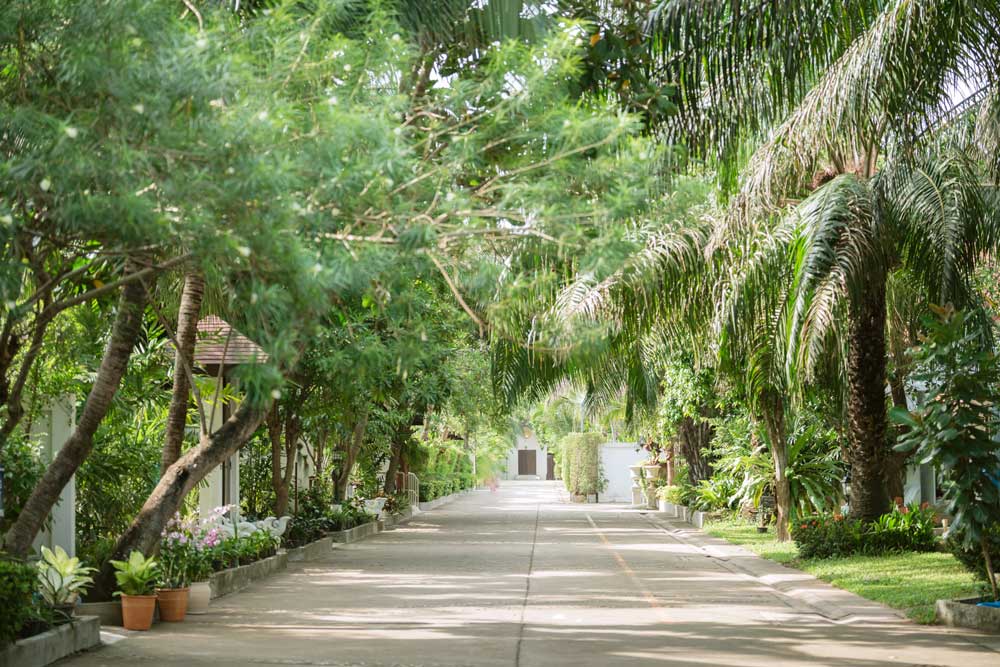
Homerly’s grounds are built with Thailand’s climate in mind, shaded walking paths, air-conditioned common spaces, and activities timed around the coolest parts of the day, so the heat is something we’ve already planned around, not something residents have to manage on their own.
Want to know more about visiting during a specific season, or planning your move? Contact us anytime, we’re glad to help.