
A dementia diagnosis in the family changes the shape of retirement planning, but it doesn’t have to close off the option of a life abroad. Thailand has quietly become a recognized destination for high-quality memory care – offering a level of one-on-one attention that’s often out of reach at home, at a fraction of the cost. Here’s what memory care in Thailand actually looks like, and how to evaluate whether it’s the right fit for your family.
Overview of Dementia in Aging
Dementia, including Alzheimer’s disease, affects memory, reasoning, and day-to-day functioning progressively over time. It’s one of the most common reasons families begin looking seriously at supported living options, since the level of supervision and specialized care required typically exceeds what’s manageable at home as the condition advances – regardless of where in the world a family is based.
Memory Care Facilities in Thailand
Specialized Dementia Care Facilities
Thailand has developed a genuine niche of dedicated memory care providers, particularly around Chiang Mai, Hua Hin, and Bangkok, alongside dementia-capable units within broader senior living communities in places like Pattaya. These range from clinical, hospital-adjacent settings to resort-style communities designed to feel as far from an institutional environment as possible.
Features of Memory Care
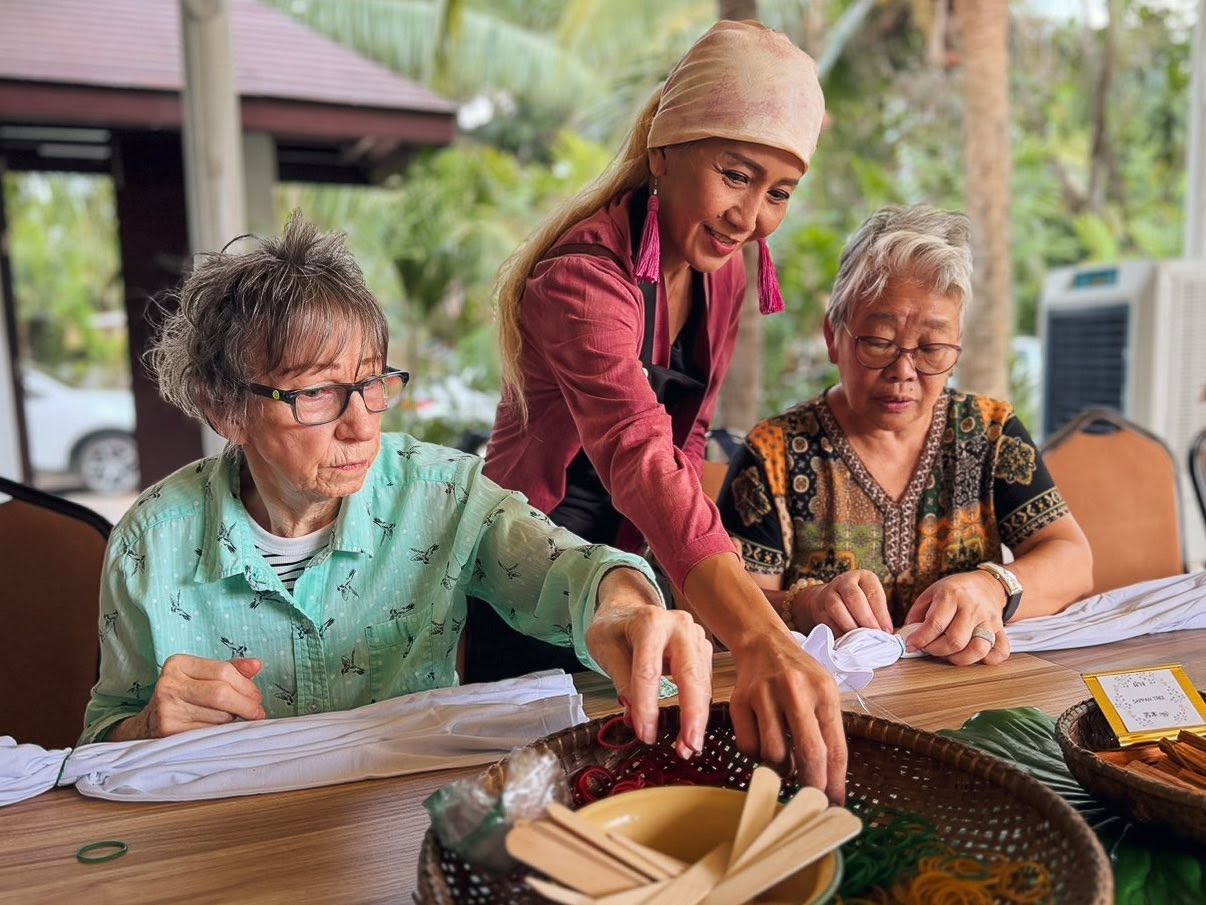
What sets memory care apart from general senior living is the staffing ratio and the structure. Many Thai memory care providers offer close to one-on-one staffing, secure and calming physical environments, consistent daily routines (which matter enormously for dementia patients), and structured activities like music or reminiscence therapy designed specifically to support cognitive engagement rather than just fill time.
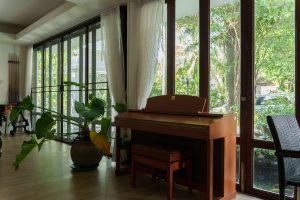
The physical environment tends to matter more here than in general senior living. Well-designed memory care spaces use clear sightlines and simple layouts to reduce disorientation, secure but unobtrusive exits to prevent wandering without feeling like a locked ward, and calming sensory elements – gardens, natural light, familiar textures – that have a genuine, measurable effect on agitation and anxiety in dementia patients. Staff training is the other half of the equation: look specifically for teams trained in dementia-specific communication techniques, since the way a caregiver responds to confusion or repetition makes an enormous difference to a resident’s day-to-day comfort.
What a Typical Day Looks Like
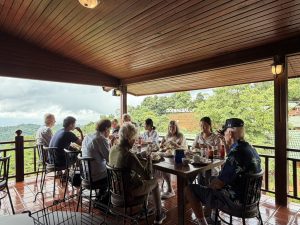
Good memory care providers build the day around predictability, since routine itself is therapeutic for dementia patients. Mornings typically follow a consistent rhythm of waking, hygiene support, and breakfast at the same time each day, followed by structured activities – light exercise, music therapy, simple craft or sensory activities – timed to a resident’s natural energy levels. Meals are usually social, taken in small groups rather than alone, and afternoons often include rest periods alongside gentle stimulation like familiar music or guided reminiscence conversations. Evenings tend to wind down early and consistently, which helps reduce the late-day confusion and agitation (sometimes called “sundowning”) that many dementia patients experience.
Costs of Memory Care
This is where Thailand’s value proposition becomes hard to ignore. High-quality, near one-on-one dementia care in Thailand often runs in the neighborhood of ฿30,000–35,000 a week – broadly comparable to £750 a week – for a level of individual attention that would cost dramatically more in the UK, US, or Australia, where equivalent facilities often staff at ratios closer to one caregiver for every six residents. Pricing varies by facility and level of care needed, but the gap compared to Western memory care costs is consistently large.
In-Community Support vs. Dedicated Facilities
Daycare and Respite Care
Not every family needs full residential memory care immediately. Daycare programs and respite stays – where a loved one attends structured activities during the day or stays for a short period while a caregiver travels or rests – are increasingly available in Thailand and can be a gentler first step than a full relocation into residential care.
Comparing With Family Care
Family caregiving is deeply valued in Thai culture, and many expat families initially try to manage dementia care at home with the help of a hired caregiver. This can work well in the earlier stages, but as needs increase, the specialized training, safety features, and structured environment of a dedicated memory care setting typically provide a better outcome for both the person living with dementia and the family caring for them.
Legal and Guardianship Issues
Planning ahead matters enormously here. It’s worth arranging power of attorney and clear guardianship documentation – ideally before cognitive decline progresses far enough to complicate legal capacity – so that a trusted family member or appointed representative can make decisions on medical care, finances, and living arrangements without unnecessary legal friction.
Expat Families Choosing Thailand
A Growing Trend
International media, including UK outlets, have reported on a genuine and growing trend: families bringing relatives with dementia to Thailand specifically for the quality and affordability of care available here, particularly when comparable at-home care in their country of origin would be financially out of reach for the same staffing ratio.
Support for Caregivers
Caring for a family member with dementia is emotionally demanding regardless of location, and isolation can make it harder. Many senior communities and expat networks in Thailand run caregiver support groups, and staff at well-established memory care facilities are typically well practiced at supporting family members through the emotional side of the transition, not just the clinical side.
Choosing the Right Care
Accreditation and Quality
Confirm that any facility you’re considering is properly licensed by Thailand’s Ministry of Public Health, staffed around the clock by trained nurses (not just general caregivers), and transparent about its pricing structure. A facility that welcomes unannounced visits and is happy to answer detailed questions is usually a good sign.
Key Questions to Ask
Before committing, ask about staff-to-resident ratios, specific dementia training staff receive, how the facility handles medical emergencies, what a typical day looks like, how family visits and communication are handled for long-distance relatives, and exactly what’s included in the quoted price versus billed separately.
Touring and Trial Stays
Numbers and brochures only tell you so much. Visiting in person – ideally unannounced, or at least without much advance notice – reveals far more than a scheduled tour: how staff actually interact with residents in an ordinary moment, whether the space feels calm or chaotic, and whether residents look engaged or simply parked in front of a television. Many facilities in Thailand also offer short trial or respite stays, which can be a genuinely useful way to see how a loved one responds to the environment before committing to a permanent move, and to gauge how the family communication process works in practice rather than in theory.
Vanliga frågor
Vad är demensvård egentligen?
Minnesvård avser specialiserade tjänster för personer som lever med Alzheimers sjukdom eller andra former av demens – vilket vanligtvis inkluderar säkra, strukturerade miljöer, specialutbildad personal och program som musik- eller reminiscensterapi som är utformade för att stödja den kognitiva funktionen.
Vad kostar demensvård i Thailand?
Högkvalitativ, nära en-till-en-vård ligger ofta på omkring 30 000–35 000 baht i veckan. Priserna varierar beroende på anläggning och omsorgsnivå, men de är genomgående mycket lägre än motsvarande personaltäthet i USA, Storbritannien eller Australien.
Finns det vårdboenden för demenssjukdomar specifikt i Pattaya?
Ja – medan de största dedikerade demensboendena är koncentrerade kring Chiang Mai och Hua Hin, erbjuder Pattaya specialiserat demensstöd inom äldreboenden, med utbildad vårdpersonal som är rustad att hantera demensspecifika behov.
Vad bör jag leta efter på ett äldreboende med demensinriktning?
Bekräfta att anläggningen är licensierad av Thailands folkhälsoministeriets, har utbildade sjuksköterskor på plats dygnet runt och är transparent med prissättningen. Säkerhetsfunktioner, strukturerade aktivitetsprogram och språkstöd spelar alla roll – och ett personligt besök innan beslut rekommenderas starkt.
Får familjemedlemmar besöka ofta?
De flesta vårdinrättningar uppmuntrar aktivt familjens engagemang, med regelbundna besökstider och, för långväga släktingar, videosamtal för att hålla kontakten mellan besöken.
Stöder thailändsk lag demensvård av god kvalitet för utlänningar?
Ja – äldreboenden licensieras av Thailands folkhälsoministerium, och utlandsdrivna och utlandsfokuserade hem är vanliga och väl etablerade. Att upprätta en generalledighet (fullmakt) och tydliga förmyndardokument enligt thailändsk lag rekommenderas starkt för långsiktig planering.
Får jag pröva en kortare vistelse innan jag förbinder mig till demensvård på heltid?
Många anläggningar erbjuder korttids- eller provboende, vilket kan vara ett uppriktigt sagt användbart sätt att se hur en nära anhörig reagerar på miljön och personalen innan man fattar ett permanent beslut.
What's the difference between "sundowning" and general confusion, and does memory care help with it?
Sundowning refers to increased confusion, agitation, or restlessness that many dementia patients experience in the late afternoon and evening. Well-run memory care programs plan around this directly – consistent routines, calming evening activities, and predictable schedules – which tends to reduce its severity compared to a less structured home environment.
Läs mer: Utforska vår Äldreomsorg to see how our memory care program works day to day, browse photos on our Fotogalleri, eller kontakta vårt team for a family consultation.
Decisions about memory care are rarely easy, and they’re even harder to make from a distance. If you’re weighing this kind of move for a parent or loved one, our team at Homerly is glad to talk through what day-to-day memory support actually looks like here, no pressure and no obligation.