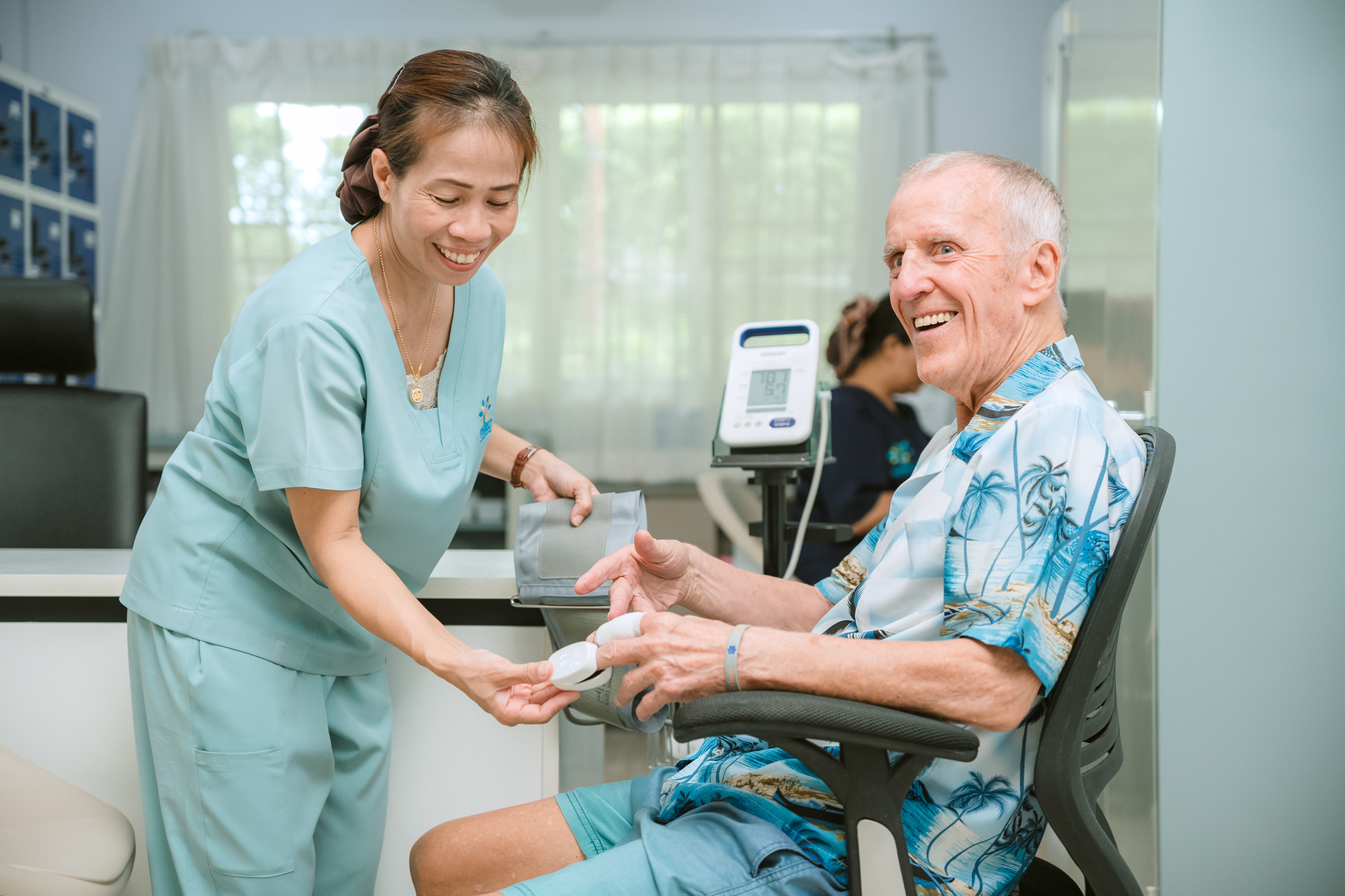
Healthcare is usually the deciding factor in whether retiring abroad feels like an adventure or a worry. The good news for anyone considering Thailand: the country has some of the best private hospitals in Asia, English-speaking medical staff in every major expat area, and costs that remain a fraction of what comparable care costs in the US, UK, or Australia. Here’s what to actually expect, and how to make sure you’re properly covered.
Overview of Thailand’s Healthcare System
Thailand runs a dual-tier healthcare system: an extensive public network that serves Thai citizens (and is available to foreigners, though often with language and wait-time trade-offs), and a large, highly developed private hospital sector that most expats and retirees use for its comfort, English-language service, and shorter waits. For seniors relocating from abroad, understanding the difference — and knowing when each option makes sense — is the first step to building a healthcare plan you can actually rely on.
Public vs Private Healthcare
Public Hospitals
Public hospitals in and around Pattaya and Bangkok provide solid, often excellent, medical care at low cost. The trade-offs for foreign patients are usually language (English-speaking staff are less consistent than in private facilities) and time (public hospitals can mean longer waits, especially for non-urgent care). For routine or budget-conscious care, public hospitals remain a genuinely good option — many long-term expats use them for everyday needs while reserving private care for anything more complex.
Private Hospitals and Clinics
Private hospitals are where most retirees and expats end up for regular care, and it’s easy to see why: modern facilities, English-speaking doctors and nurses, minimal wait times, and a level of comfort closer to a hotel than a typical hospital. The trade-off is cost, though even private care in Thailand is dramatically cheaper than equivalent treatment in most Western countries.
Quality and Accreditation
Many of Thailand’s leading private hospitals hold Joint Commission International (JCI) accreditation — the same international quality benchmark used by top hospitals worldwide — and some specialize specifically in serving international patients, with dedicated interpreter services and insurance coordination desks built into their standard operations.
Health Insurance Options
Mandatory Insurance for the O-A Retirement Visa
If you’re applying for the O-A retirement visa, health insurance isn’t optional. As of 2026, the minimum required coverage is ฿40,000 for outpatient treatment and ฿400,000 for inpatient (hospital) treatment per year, from a plan approved by Thailand’s Office of Insurance Commission. Immigration checks this directly at application and renewal, so it needs to stay continuously active — letting a policy lapse can jeopardize your visa status, not just your health coverage.
Private Health Insurance for Expats
Beyond the visa minimum, most retirees choose more comprehensive coverage, either through an international insurer (Cigna, AXA, Pacific Cross, and IMG are commonly used by the expat community) or a Thailand-based plan. International plans tend to offer broader global coverage and higher claim limits; local Thai plans are often cheaper but may cap benefits lower. Neither option is automatically “better” — it depends on your health history, budget, and whether you want coverage that would follow you if you traveled or eventually moved elsewhere.
Costs of Plans
Premiums vary significantly with age and health history. A healthy retiree in their mid-50s to early 60s might pay roughly $75–200 a month for solid coverage, while someone in their late 60s or beyond, or with pre-existing conditions, can expect meaningfully higher premiums — sometimes $250–350 a month or more. It’s also worth knowing that some insurers stop accepting new applicants past a certain age (often 65 or 70), so locking in a policy earlier rather than later tends to be both cheaper and simpler.
Typical Medical Costs
GP and Specialist Visits
A general practitioner visit runs roughly ฿200–500 at a public hospital, or ฿700–3,000 at a private clinic depending on the specialty. Specialist consultations (cardiology, orthopedics, and similar) sit toward the higher end of that private-hospital range, though still well below equivalent costs in most Western countries.
Hospitalization and Pharmacies
Hospitalization costs vary enormously depending on the procedure, but even significant interventions at top private hospitals are typically a fraction of US or UK private-pay prices. Prescription medication is generally inexpensive and widely available at hospital pharmacies and independent pharmacies alike, many of which stock the same international brands you’d recognize from home.
Local Facilities in Pattaya
Major Hospitals
Pattaya is well served by large private hospitals — including well-known names like Bangkok Hospital Pattaya — offering everything from emergency care to specialist clinics, many with dedicated international patient departments and multilingual staff.
24/7 Clinics and Telemedicine
Beyond the major hospitals, Pattaya has a dense network of round-the-clock clinics for non-emergency needs, and telemedicine has become increasingly common — letting residents book video consultations for routine follow-ups without leaving home.
Tips for Senior Healthcare
Choosing an Insurance Plan
Look closely at how a plan handles chronic conditions (diabetes, heart disease, and similar), whether it covers pre-existing conditions at all, and what its lifetime or annual claim limits look like. A cheaper plan that caps out quickly can end up costing far more than a slightly pricier plan with realistic limits for the kind of care you’re likely to need as you age.
Health Check-Up Schedule
Most private hospitals in Thailand offer comprehensive annual health check-up packages — often more thorough, and more affordable, than routine physicals back home. Combined with staying current on recommended vaccinations, an annual check-up is one of the simplest ways to catch small issues before they become bigger ones.
Veelgestelde vragen
Do I need special insurance as a retiree?
Yes, if you’re on the O-A visa – Thai immigration requires health insurance covering at least ฿40,000 outpatient and ฿400,000 inpatient per year. Many retirees choose additional coverage beyond this minimum to avoid high out-of-pocket costs for more serious treatment.
How much is a doctor's visit in Thailand?
Public hospitals typically charge ฿200–500 per visit, while private clinics run ฿700–3,000 or more depending on the specialty. Even with insurance, some plans apply a co-pay, so it’s worth checking your policy’s specifics.
Are there good hospitals in Pattaya?
Yes – Pattaya has several well-regarded private hospitals with English-speaking staff, offering everything from emergency care to specialist clinics and comprehensive senior health check-ups.
What about ongoing conditions like diabetes?
Most chronic conditions are well managed in Thailand, with numerous specialist clinics and dietitian services available. It’s worth confirming that any insurance plan you choose specifically covers ongoing management of chronic conditions, since not all do.
Can I use my home country's Medicare or national health coverage in Thailand?
Generally, no – most national health programs (including US Medicare) don’t cover care received overseas. Expats rely on private insurance, though some home-country pension or veteran programs offer limited reimbursement for foreign medical costs, so it’s worth checking your specific program.
How do I find a doctor who speaks my language?
Most doctors and nurses at private hospitals in expat areas speak strong English, and larger hospitals often have staff who speak other languages too. Expat community groups are also a reliable source of personal recommendations.
Are emergency services reliable in Pattaya?
Yes – private hospitals in Pattaya offer modern, prompt ambulance and emergency care. For general medical emergencies, Thailand’s national emergency line is 1669.
Many families choosing Homerly tell us that healthcare peace of mind was the single biggest factor in their decision. Our on-site support and hospital partnerships are designed to take the guesswork out of exactly the questions this article covers — get in touch if you’d like the specifics for your situation.