
At 81, Claudette never imagined she would be moving from Canada to Thailand for the first time.
She had lived independently in her own apartment for years. Then, after several falls, the question of where and how she should live could no longer be postponed.
Her son raised the subject gently, but Claudette already understood that something had to change.
There was one thing she knew with certainty.
“I don’t want to go into an institution.”
Claudette had already considered senior residences in Canada. What troubled her was not the idea of receiving support, but the fear of becoming defined by it.
“You’re referred to as a patient. I don’t want to be a patient.”
For many older adults and their families, this is one of the most difficult parts of considering senior living. The practical need for support may be clear, while the available options do not always reflect the life the person still wants to lead.
Claudette’s perspective began to change when her son brought her to visit Homerly, an international senior living community near Pattaya, Thailand.
What Claudette Noticed First
On her first visit, Claudette found herself comparing the setting with the residences she had considered in Canada.
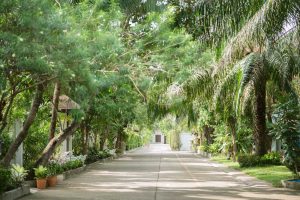
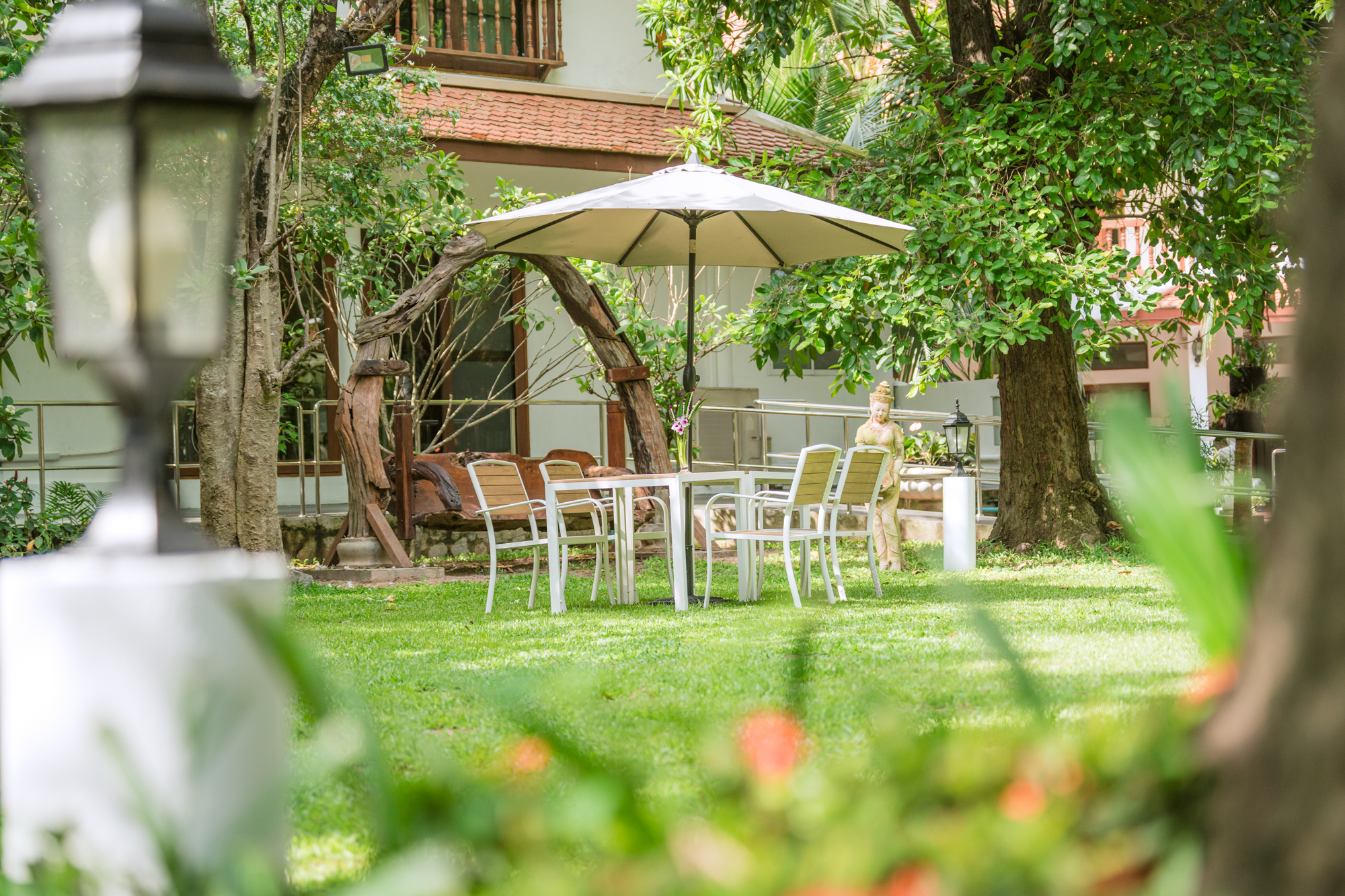
She noticed the palm trees, gardens, swimming pool and open spaces between the individual buildings.
“I thought, ‘This is a senior place?’ It felt like a resort.”
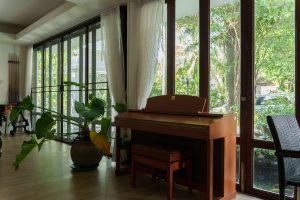
The layout also caught her attention. Dining, physiotherapy and nursing were located in separate spaces across the grounds, rather than arranged along the corridors of one large building.
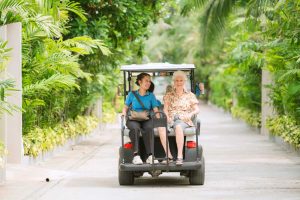
“You’re not stuck in one building. You actually go outside. I thought that was amazing.”
For Claudette, these details shaped the atmosphere of everyday life. The surroundings felt open and connected to nature, while professional care remained close by.
It offered her a way of thinking about senior living that she had not previously encountered.
Life Beyond a Care Schedule
What ultimately stayed with Claudette was not only how Homerly looked, but how life felt after she arrived.
“Nobody treats you here like you’re old.”
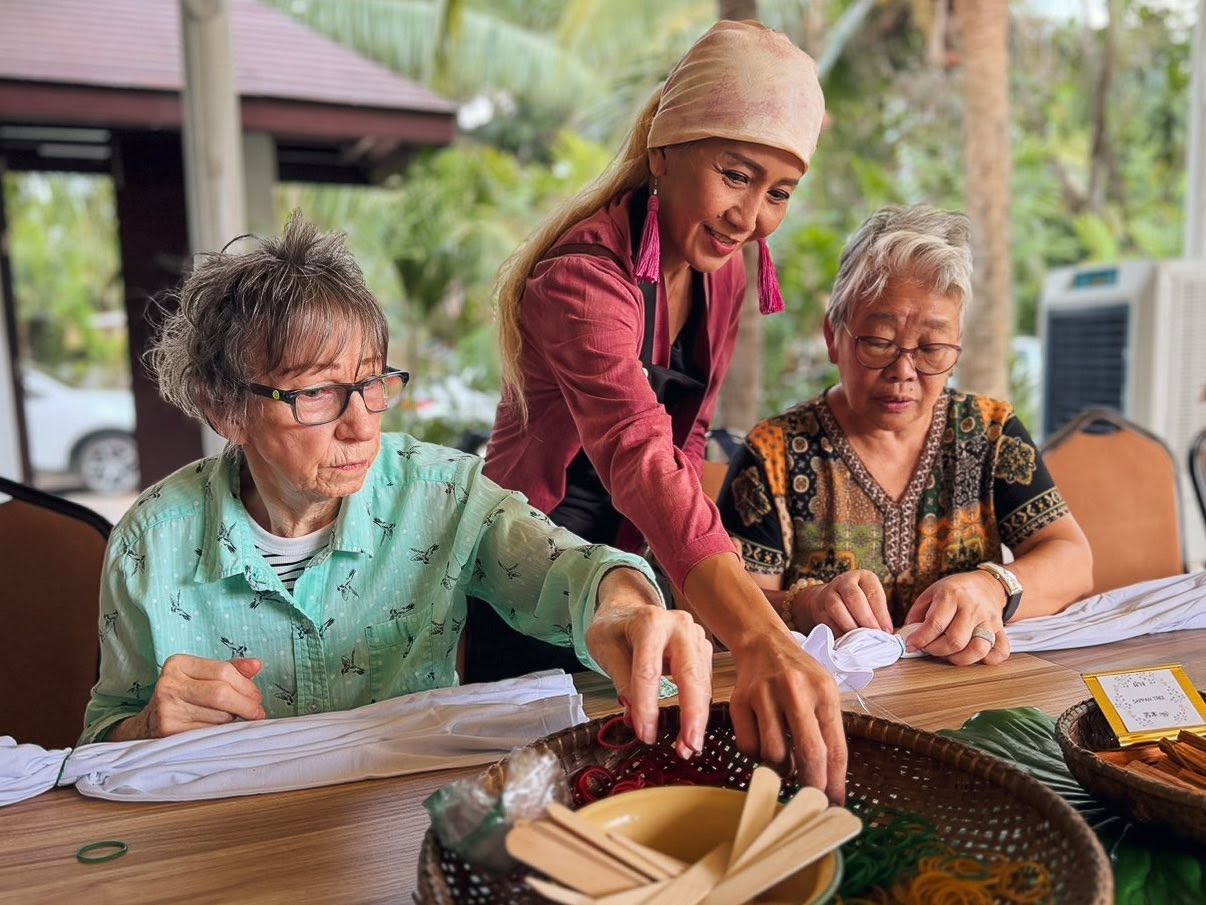
Her days are not built around a rigid institutional routine. She can choose whether to join an activity, spend time by the pool, share a meal with neighbours or enjoy a quieter afternoon.
“You can be your own self.”
This distinction matters when families are comparing assisted living options in Thailand.
A care plan may explain what support is available, but it does not necessarily reveal what everyday life will feel like. Families may also want to understand whether residents are known as individuals, whether their preferences continue to matter and whether the environment offers more than accommodation and supervision.
Claudette’s experience speaks to those less visible questions.
Finding Community in a New Country
Relocating internationally at 81 might sound daunting.
Yet when Claudette reflects on arriving at Homerly, she speaks less about the logistics of the move than about the people she met afterward.
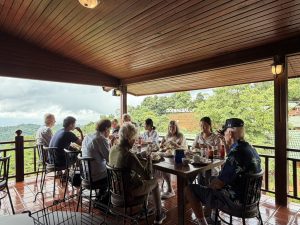
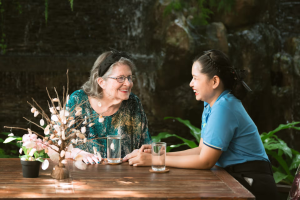
Neighbours introduced themselves. Residents stopped by to say hello. Familiar faces gradually became part of her everyday life.
“It’s just like family. You get to know your neighbours.”
She remembers people such as Debbie, Carla and Reggie coming over to introduce themselves.
“They’re your friends from now on.”
This kind of connection cannot be created through facilities alone. It grows through repeated encounters, shared meals and the small, informal moments that allow people to become part of one another’s lives.
For international residents, this sense of welcome can be especially important. Moving to Thailand does not only involve adapting to a new residence. It may also mean adjusting to a new country, climate and rhythm of life.
A genuine community can make that transition feel far less unfamiliar.
Returning to the Water
After three surgeries, Claudette began considering how she might regain confidence in her movement.
The saltwater swimming pool appealed to her as a gentle place to begin, although she knew she would need to take things slowly after many years away from swimming.
“I haven’t done this for 50 years, so I can’t just go in there. But I can take a caregiver with me into the water.”
That reassurance made the idea feel possible.
“Whatever I want to do, there’s help.”
Her experience illustrates an important aspect of assisted living that is sometimes overlooked. Support is not only about responding when something goes wrong. At its best, it can help a person continue exploring what they would still like to do.
For Claudette, having someone available to accompany her into the pool means she can approach movement with greater confidence and at a pace that feels right for her.
What Families Can Learn From Claudette’s Story
No two residents will have the same priorities, but Claudette’s experience highlights several useful questions for families comparing senior living in Thailand:
What does everyday life actually feel like?
Photographs of rooms and lists of facilities are useful, but they do not show how residents move through their day, interact with one another or experience the atmosphere of the community.
Is care present without dominating daily life?
Older adults may need nursing, mobility support or rehabilitation while still wanting to be recognised for their personality, interests and preferences.
How are new residents welcomed?
Community is particularly important for people relocating from overseas or moving away from an established social circle.
Can support help residents remain engaged?
Care should not only protect a person from risk. It should also make meaningful activities, movement and new experiences more accessible.
Does the environment suit the individual?
Climate, access to outdoor space, accommodation style, medical needs, language and proximity to family can all shape whether a residence feels right.
These questions are often more revealing than simply asking which senior living community has the longest list of amenities.
What Came After the Move
Claudette’s story is not only about leaving Canada or finding a new residence.
It is about what followed: familiar faces, spontaneous conversations, shared meals and the feeling of remaining fully part of life around her.
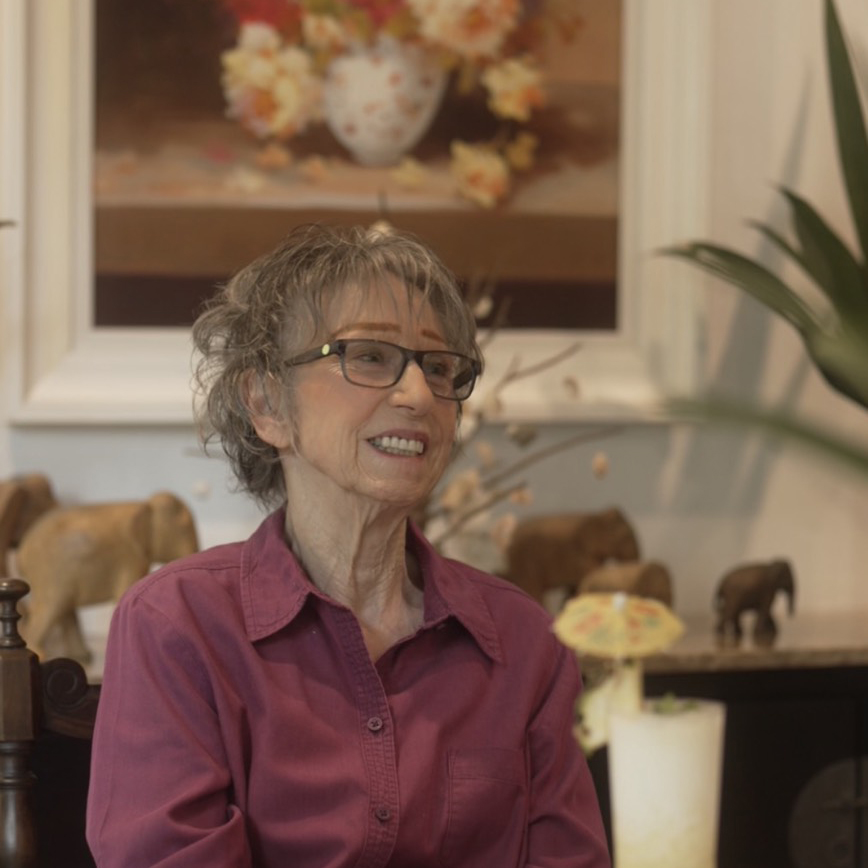
“Nobody has ever treated me like I’m old – and I’m old. I’m 81,” she says with a laugh.
It is a light-hearted remark, but it captures something meaningful. Age is part of Claudette’s story without becoming the only thing that defines her.
Her move opened a chapter shaped by new relationships, renewed confidence and experiences that still lie ahead.
For families researching international senior living or assisted living in Thailand, Claudette’s story offers a personal perspective on what the right environment can make possible.
Watch Claudette’s full conversation below and hear her experience in her own words.
Vanliga frågor
Can older adults move to senior living in Thailand from overseas?
Yes. International residents can relocate to senior living communities in Thailand, although the process should be planned carefully. Important considerations include visa arrangements, medical records, medication, travel assistance, insurance, mobility needs and communication with the receiving care team.
Homerly supports international residents and families through the relocation process.
Where is Homerly located?
Homerly is an international senior living and assisted living community near Pattaya, Thailand. Its location offers access to the coast while remaining within reach of Bangkok and major international transport connections.
Does Homerly provide assisted living and nursing support?
Homerly supports residents with different levels of need, including personalised daily assistance, nursing care, rehabilitation and physiotherapy. Care arrangements are based on the individual resident’s health, preferences and daily requirements.
Is Homerly suitable for residents who still value an active lifestyle?
Resident life can include social activities, dining, excursions, physiotherapy, time outdoors and individual interests. Participation depends on each resident’s preferences, mobility and care requirements.