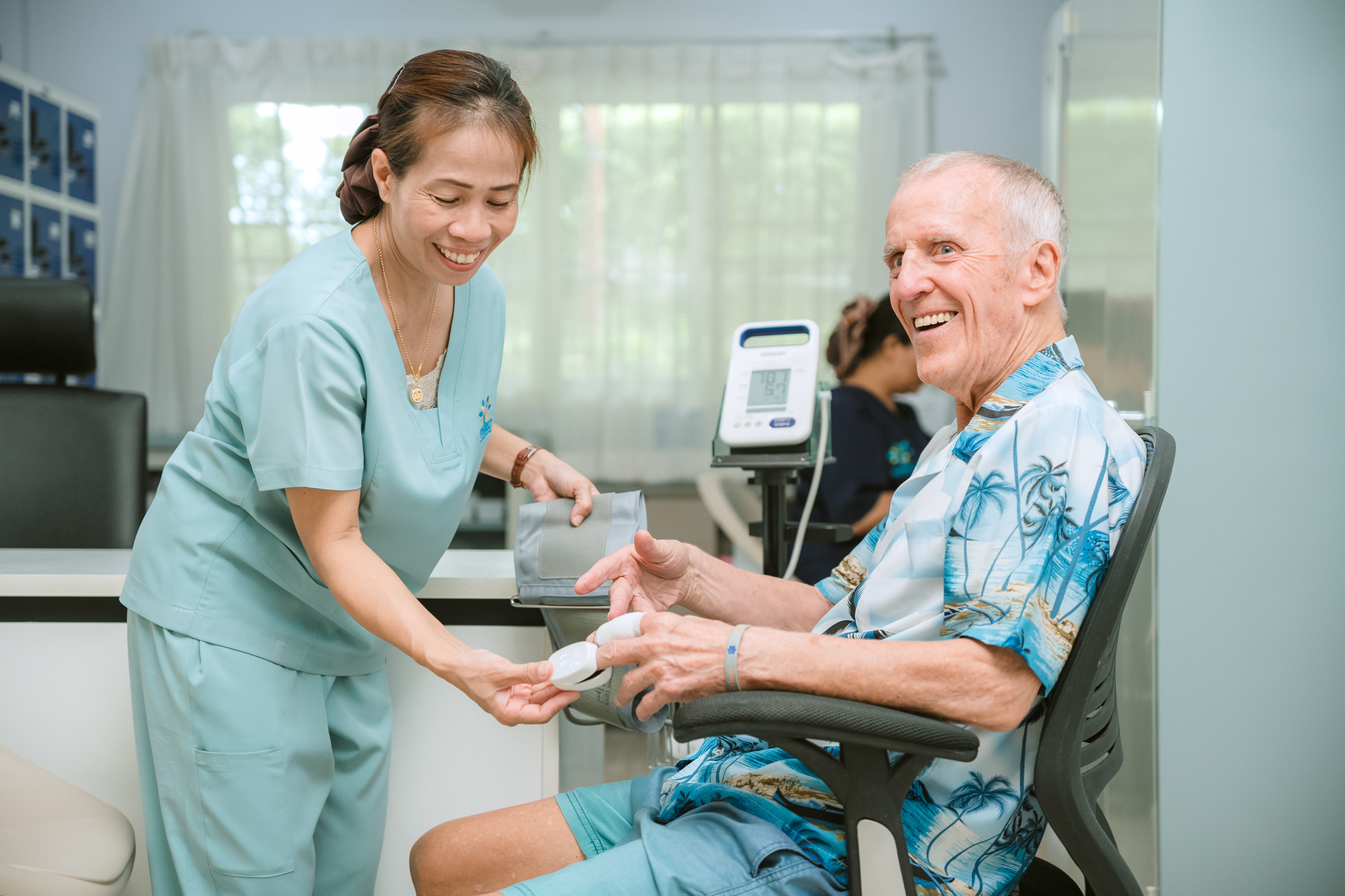

海外移住してリタイア生活を送るのが冒険になるか、それとも心配の種になるかは、通常、医療制度が決め手となります。タイへの移住を検討している方にとって朗報なのは、同国がアジア屈指の優れた私立病院を有し、主要な外国人居住エリアのどこでも英語を話す医療スタッフがおり、医療費が米国、英国、オーストラリアでの同等の治療費のわずかごく一部にとどまるという点です。ここでは、実際に期待できることと、確実に適切な補償を受ける方法について説明します。.
タイの医療制度の概要
タイには、二層構造の医療制度があります。タイ国民を対象とする大規模な公的ネットワーク(外国人も利用できますが、言語の壁や待ち時間が長くなるというトレードオフがあります)と、快適さ、英語対応、短い待ち時間を求めてほとんどの外国籍駐在員や退職者が利用する、大規模で高度に発達した民間病院セクターです。海外から移住する高齢者にとって、その違いを理解し、どちらの選択肢がいつ理にかなっているかを知ることが、実際に頼りになる医療プランを構築するための第一歩となります。.
公的医療 vs 民間医療
公立病院
パタヤおよびバンコクとその周辺の公立病院は、低価格でありながら確実で、時には卓越した医療を提供しています。外国人患者にとっての代償は、通常、言語(英語を話すスタッフの体制が私立施設ほど一貫していない)と時間(特に緊急性のない治療の場合、待ち時間が長くなることがある)です。日常的な治療や予算を重視する治療において、公立病院は依然として非常に良い選択肢であり、多くの長期滞在外国人は日常の医療ニーズに公立病院を利用し、より複雑な治療には私立病院をと使い分けています。.
民間病院およびクリニック
私立病院は、ほとんどの退職者や外国人が定期的な治療のために最終的に利用する場所であり、その理由は容易に理解できます。近代的な設備、英語を話す医師や看護師、最小限の待ち時間、そして一般的な病院というよりもホテルに近い快適さです。その代償となるのは費用ですが、タイにおける私立医療でさえ、ほとんどの西洋諸国における同等の治療費に比べれば劇的に安価です。.
品質と認定
タイの主要な私立病院の多くは、世界中のトップ病院で使用されているものと同じ国際的な品質基準である国際医療機能評価(JCI)の認定を受けており、一部の病院は特に外国人患者の受け入れに特化しており、標準業務の中に専用の通訳サービスや保険調整デスクが組み込まれています。.
健康保険の選択肢
O-Aリタイアメントビザの義務的保険
O-Aリタイアメントビザを申請する場合、健康保険は任意ではありません。2026年現在、最低限必要な補償額は、タイ保険委員会事務局(OIC)の承認を受けたプランによるもので、年間あたり外来治療が40,000バーツ、入院治療が400,000バーツです。入国管理局は申請時および更新時にこれを直接確認するため、保険は継続して有効でなければなりません。保険を失効させると、医療保障だけでなくビザのステータス自体が危うくなる可能性があります。.
駐在員向け民間医療保険
ビザの最低要件を超えて、ほとんどの退職者は、国際的な保険会社(Cigna、AXA、Pacific Cross、IMGが駐在員コミュニティでよく利用されています)またはタイ国内のプランを通じて、より包括的な補償を選択します。国際プランは、より広範なグローバルな補償と高い保険金請求限度額を提供する傾向があります。一方、タイ国内のプランは通常より安価ですが、給付金の上限が低く設定されている場合があります。どちらのオプションが自動的に「優れている」ということはなく、健康上の既往歴、予算、旅行先や最終的に他の場所へ移住した際にも補償を継続したいかどうかに依存します。.
プランの料金
保険料は年齢や健康状態によって大きく異なります。50代半ばから60代前半の健康な退職者の場合、手厚い補償内容であれば月額およそ$75~200を支払うことになりますが、60代後半以上の方や持病のある方は、保険料が大幅に高くなり、場合によっては月額$250~350以上になることもあります。 また、一部の保険会社では、一定の年齢(多くの場合65歳または70歳)を超えると新規加入の受付を停止するため、できるだけ早めに保険に加入しておく方が、保険料も安く済み、手続きも簡単になる傾向があります。.
標準的な医療費
総合診療医(GP)および専門医の受診
公立病院での一般的な医師の診察料は約200〜500バーツ、専門分野にもよりますが、民間クリニックでは約700〜3,000バーツです。心臓病学、整形外科などの専門医の診察料はその民間病院の価格帯の上限寄りですが、西欧諸国の同等の費用と比較すると依然としてかなり安価です。.
入院と薬局
入院費は施術内容によって大きく異なりますが、最高峰の私立病院における大規模な手術であっても、通常、米国や英国の自由診療価格のわずか数分の一に過ぎません。処方薬は総じて安価であり、病院の薬局でも独立系の薬局でも広く入手可能です。その多くには、母国で見慣れたものと同じ国際的ブランドの医薬品が取り揃えられています。.
パタヤの地元施設
主要な病院
パタヤには、バンコク病院パタヤなどの有名な医療機関をはじめとする大規模な私立病院が充実しており、救急医療から専門外来まであらゆる医療サービスを提供しています。その多くには、専用の国際患者部門や多言語を話すスタッフが備わっています。.
24時間対応クリニックと遠隔医療
パタヤには主要な病院のほかにも、緊急ではない医療ニーズに対応する24時間体制のクリニックの密集したネットワークがあり、遠隔医療もますます一般的になっています。これにより、住民は自宅にいながら定期的な経過観察のためのビデオ診療を予約できるようになっています。.
高齢者医療のヒント
保険プランの選び方
プランが慢性疾患(糖尿病、心疾患など)にどのように対応しているか、既往症がそもそもカバーされるか、そして年間または生涯の保険金請求の上限額がどうなっているかをよく確認してください。初期費用は安くてもすぐに上限に達してしまうプランは、年齢を重ねるにつれて必要になりそうな医療費に対して現実的な上限を設定している、少し高めのプランよりも最終的にはるかに高くつく可能性があります。.
健康診断スケジュール
タイのほとんどの私立病院では、包括的な年次健康診断パッケージを提供しています。それは多くの場合、自国での通常の健康診断よりも詳細でありながら、より手頃な価格です。推奨される予防接種を常に最新の状態に保つことと組み合わせることで、年次健康診断は、小さな問題が大きな問題になる前に発見するための最も簡単な方法の一つです。.
よくある質問
退職者として特別な保険に加入する必要がありますか?
はい、O-Aビザの場合、タイ入国管理局は年間最低4万バーツの外来診療と4万バーツ(※注:正しくは40万バーツ)の入院治療をカバーする健康保険への加入を義務付けています。多くのリタイア者は、より重篤な治療における高額な自己負担費用を避けるため、この最低限の要件を超える追加の補償を選択しています。.
タイでの診察料はいくらですか?
公立病院の診察料は通常1回あたり200〜500バーツですが、私立クリニックは診療科によって700〜3,000バーツ以上かかります。保険に加入している場合でも、プランによっては自己負担金(コペイ)が発生するため、保険証券の詳細を確認することをお勧めします。.
パタヤには良い病院がありますか?
はい、パタヤには英語を話すスタッフが常駐し、救急医療から専門外来、充実した高齢者向け健康診断まであらゆるサービスを提供している評価の高い私立病院がいくつかあります。.
糖尿病のような持続的な病状についてはどうですか?
タイでは多くの専門クリニックや栄養士のサービスを利用できるため、ほとんどの慢性疾患は十分に管理されています。すべての保険が慢性疾患の継続的な治療をカバーしているわけではないため、選択する保険プランが慢性疾患の継続的治療を具体的にカバーしていることを確認する価値があります。.
タイで自国の医療保険や国民健康保険を利用することはできますか?
一般的に、米国メディケアを含むほとんどの国民健康保険プログラムは海外での医療費をカバーしていません。駐在員などは民間保険を利用しますが、自国の年金や退職軍人向けプログラムの中には海外の医療費に対して限定的な払い戻しを行うものもあるため、ご自身のプログラムを確認する価値はあります。.
自分の話す言語を話す医師を見つけるにはどうすればよいですか?
外国人居住区にある私立病院のほとんどの医師や看護師は流暢な英語を話し、大規模な病院には他の言語を話すスタッフがいることもよくあります。外国人コミュニティグループも、個人的な推薦を得るための信頼できる情報源です。.
パタヤの緊急サービスは信頼できますか?
はい、パタヤの私立病院では、最新かつ迅速な救急車および救急医療を提供しています。一般的な医療緊急事態の場合は、タイの全国救急番号 1669 にご連絡ください。.
Homerlyを選ばれるご家族の多くが、医療における安心感が決断の最大の決め手であったと語られます。当施設の常駐サポートと病院との提携は、この記事が取り上げているまさにその疑問に対する不安を取り除くように設計されています。お客様の状況に応じた詳細について知りたい場合は、ぜひお問い合わせください。.